
Shopping Cart

- -20%

WHAT IS A TWO-COMPONENT OR TWO-COMPONENT PAINT?
A two-component paint is one that needs a catalyst to harden.
It is supplied in two separate pots, and the paint or varnish set is usually sold together with its catalyst (not just any catalyst will do, each paint has its own).
The paint (Component A) is packaged on one side and the catalyst (Component B) on the other.
These two components should be mixed at the time of use, and only the amount of material you are going to use, since after a certain time from mixing, the material dies (hardens) and is no longer suitable for application.
The technical data sheet for the two-component paint or varnish will contain information about the pot life of the mixture (the time the mixture is usable for application).
The price of these paints usually includes both pots, or the complete set.
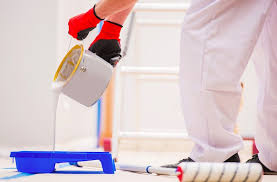
When preparing the paint for application, the two components must be mixed properly.
The mixing ratio will be: the total volume of component A (paint, varnish, or resin) to the total volume of component B (catalyst or hardener) in the container. Typically, the containers of component A have enough space to add all of component B and mix it thoroughly.
We will carry out this process when we are going to use up the entire contents of both containers.
If we don't want to use all the containers, because we estimate that we will have leftover material, or we won't be able to use it all up by the time the mixture expires and is no longer usable, we will look either at the label on the containers or at the product's technical data sheet, which is where the appropriate proportion of the mixture will be indicated for each type of two-component paint, varnish, or resin.
For example, 8:1 (eight parts paint, one part catalyst).
For example, 4:1 (for every 4 parts of paint, varnish or resin, 1 part of catalyst)
We will add to an empty jar or container (if we do not want to use all of the containers), the proportional part of each container A and B, as detailed on the container or the product's technical data sheet.
We can use a mixing cup or a container with a centiliter measuring cup to measure the amount of each of the products that we have to add.
We will vigorously stir the mixture of the two components together (A+B).
We'll let this mixture rest for a few minutes (2-5) to allow any foam or bubbles created while stirring to dissipate. (Especially if using a power mixer).

To this mixture, already stirred, the appropriate solvent for each paint must be added, to dilute it properly, both in the first and second coats.
It is advisable to read the technical data sheet for each product to find out the percentage and type of solvent that each paint requires.
Two-component paint has a useful life.
This means that after a few hours from being mixed, the paint will dry out and cannot be used. Once the paint has hardened, it cannot be applied, because even if we try to revive it with solvent, it will have lost its properties and hardness.
The shelf life of mixed paint is usually between 3 and 6 hours, but there are two-component paints which, depending on the heat, ventilation, etc., can last at most 20 minutes.
It is very important to know the shelf life of the mixture of these paints, information that can be found in the technical data sheet of each paint.
In our online store, you can find the technical specifications for each of our products on their respective pages, in a tab below the "Add to Cart" button that says: Technical Specifications / Performance.
We shouldn't be afraid to use two-component paints; their hardness, adhesion, and quality are unbeatable, incomparable to a one-component paint, and the working time is usually ample.
You can buy the paint, varnish or two-component resin in sets of smaller containers, to mix the paint little by little, as you use it in each coat, making the measurements easier.
Two-component paints or varnishes are almost always made of EPOXY RESINS (for interior use) or POLYURETHANE RESINS (for interior and exterior use).
In other articles on our blog, we explain the characteristics of each of the different two-component resins. You can read the articles related to two-component epoxy paint, two-component polyurethane paint, and decorative and self-leveling paints for 3D floors and vinyl floors, made of two-component epoxy.

Comments (1)